
 By Admin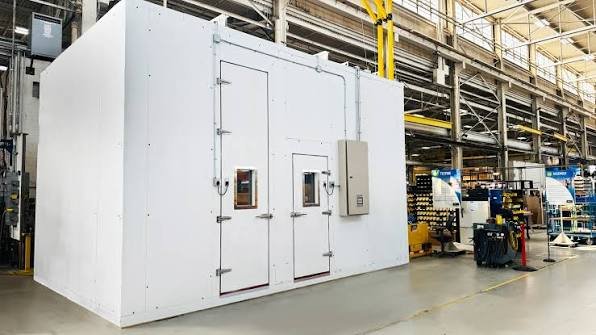
Mission-critical components must perform reliably even when they operate in demanding environments. Aircraft systems, aerospace electronics, defense equipment, communication devices, automotive components, and other specialized technologies can encounter low atmospheric pressure, temperature changes, and reduced air density during operation. Testing these products under controlled conditions helps engineers identify weaknesses before equipment is deployed in the field. An altitude test chamber provides a practical environment for recreating high-altitude conditions and evaluating how components respond.
Understanding Altitude Testing
Altitude testing is designed to simulate the environmental conditions associated with elevated operating locations. As altitude increases, atmospheric pressure decreases, which can affect mechanical systems, electrical components, cooling performance, insulation, and other product characteristics.
An altitude test chamber allows engineers to control pressure and, depending on the chamber configuration, temperature and humidity. By creating repeatable environmental conditions, testing teams can observe how a component behaves under conditions that may be difficult or impossible to reproduce consistently outdoors.
For mission-critical equipment, this controlled approach is particularly important. A component that performs normally at standard atmospheric pressure may experience unexpected problems when exposed to reduced pressure. Identifying those issues during laboratory testing can support design improvements and reduce the possibility of field failures.
Why Mission-Critical Components Require Altitude Testing
Mission-critical equipment is expected to maintain dependable performance when failure could have significant operational consequences. Aerospace avionics, aircraft electronics, satellite equipment, military systems, navigation devices, and emergency communication technologies are examples where environmental reliability can be especially important.
Reduced atmospheric pressure can influence several aspects of a product. Heat transfer through air can change, potentially affecting cooling systems and temperature-sensitive electronics. Electrical insulation may also behave differently at lower pressures, increasing the importance of appropriate qualification testing for high-voltage systems.
Mechanical components can face additional challenges. Seals, housings, pressure-sensitive assemblies, batteries, and fluid systems may respond differently as external pressure decreases. Testing helps engineers determine whether these changes remain within acceptable operating limits.
How an Altitude Test Chamber Supports Controlled Testing
An altitude test chamber creates a controlled environment in which pressure can be reduced to represent specific altitude conditions. Testing teams can establish a defined test profile and monitor the component throughout the procedure.
Before testing begins, engineers generally identify the operating requirements of the product. These may include pressure levels, temperature ranges, exposure durations, operational loads, and performance criteria. The test chamber can then be configured to reproduce the required environmental conditions.
Sensors and monitoring equipment can track important parameters throughout the test. Depending on the application, engineers may observe voltage, current, temperature, vibration, mechanical movement, communication performance, or other operating characteristics.
The ability to repeat the same conditions is one of the major advantages of laboratory-based altitude testing. If a design is modified, engineers can perform another test under comparable conditions and determine whether the changes improved environmental performance.
Testing Electrical and Electronic Components
Electronic systems can be particularly sensitive to changes in atmospheric pressure and temperature. Mission-critical electronics may include circuit boards, sensors, power supplies, control modules, communication equipment, and avionics.
During altitude testing, engineers can monitor equipment while it operates under reduced pressure. This can reveal overheating, electrical instability, insulation concerns, unexpected shutdowns, or other performance changes.
Thermal management deserves particular attention. Because air density decreases as altitude increases, air-based cooling can become less effective. Equipment that remains within its normal temperature range at sea level may experience different thermal behavior at elevated altitudes.
Testing therefore provides an opportunity to evaluate whether heat sinks, fans, enclosures, and other thermal-management features continue to provide adequate performance.
Mechanical and Material Considerations
Altitude testing is not limited to electronics. Mechanical assemblies and materials can also be evaluated under reduced pressure.
Sealed enclosures, gaskets, valves, actuators, pressure-sensitive devices, and fluid-filled systems may respond differently as the surrounding pressure changes. Weak seals can develop leaks, while trapped gases inside assemblies may expand as external pressure decreases.
Materials and construction methods can therefore influence product reliability. Engineers can use test results to determine whether an enclosure requires reinforcement, whether seals need modification, or whether a component needs additional environmental protection.
For products intended for aviation, aerospace, defense, or other specialized applications, these evaluations can form an important part of a broader environmental qualification program.
Designing an Effective Altitude Test Program
A successful altitude test program begins with clearly defined objectives. Engineers should determine what the component needs to withstand and what measurements will demonstrate acceptable performance.
The test profile should reflect realistic operating conditions whenever possible. This may involve gradually reducing pressure, holding the component at a target condition, operating the equipment under load, and returning it to normal atmospheric pressure.
Testing may also combine altitude with temperature extremes. Such combined environmental exposure can provide more information than testing each condition independently because real-world systems can encounter multiple stresses at the same time.
Documentation is equally important. Engineers should record chamber conditions, equipment status, test duration, measurements, and any abnormal behavior. Detailed records make it easier to analyze failures and compare results across different design versions.
Identifying Potential Failure Modes
One of the primary purposes of altitude testing is discovering weaknesses before deployment. A mission-critical component may pass standard functional tests but still develop problems when exposed to reduced pressure.
Potential failure modes can include overheating, insulation breakdown, seal leakage, mechanical deformation, reduced cooling efficiency, sensor inaccuracies, and unexpected electronic behavior.
When a problem occurs, engineers can investigate its cause and determine whether changes to materials, circuitry, thermal management, enclosure design, or manufacturing processes are necessary. Retesting after modifications helps verify whether corrective measures have addressed the issue.
Benefits of Repeatable Environmental Testing
Repeatability is essential when evaluating mission-critical equipment. An altitude test chamber provides a controlled environment where pressure conditions can be established with greater consistency than many field-based testing methods.
This consistency supports product development, quality assurance, troubleshooting, and qualification activities. Engineers can compare different prototypes using similar test conditions and identify performance trends over time.
Laboratory testing can also help organizations reduce development risks. Finding an environmental weakness early can prevent costly redesigns after deployment and may reduce the possibility of unexpected operational failures.
Supporting Reliability and Product Qualification
Altitude testing can be integrated into a broader environmental testing strategy. Depending on the product, organizations may combine altitude evaluation with temperature, humidity, vibration, shock, or other environmental tests.
The exact testing requirements depend on the application, applicable standards, customer specifications, and intended operating environment. Engineering teams should establish appropriate acceptance criteria before testing begins.
When used correctly, an altitude test chamber becomes an important tool for understanding how mission-critical components behave outside normal atmospheric conditions. The resulting data can support engineering decisions and contribute to more robust product designs.
Conclusion
Mission-critical components must be designed with their intended operating environment in mind. Reduced atmospheric pressure can affect thermal performance, electrical behavior, mechanical assemblies, seals, and materials in ways that may not become apparent during ordinary laboratory testing.
Using an altitude test chamber allows engineers to reproduce controlled low-pressure conditions, monitor equipment performance, identify potential failure modes, and evaluate design improvements. When combined with careful test planning, accurate instrumentation, and thorough documentation, altitude testing can provide valuable evidence about environmental reliability.
For industries where dependable performance is essential, controlled altitude testing is an effective part of the product development and qualification process. It helps engineers understand environmental limitations and create components capable of meeting demanding operational requirements.