
 By Admin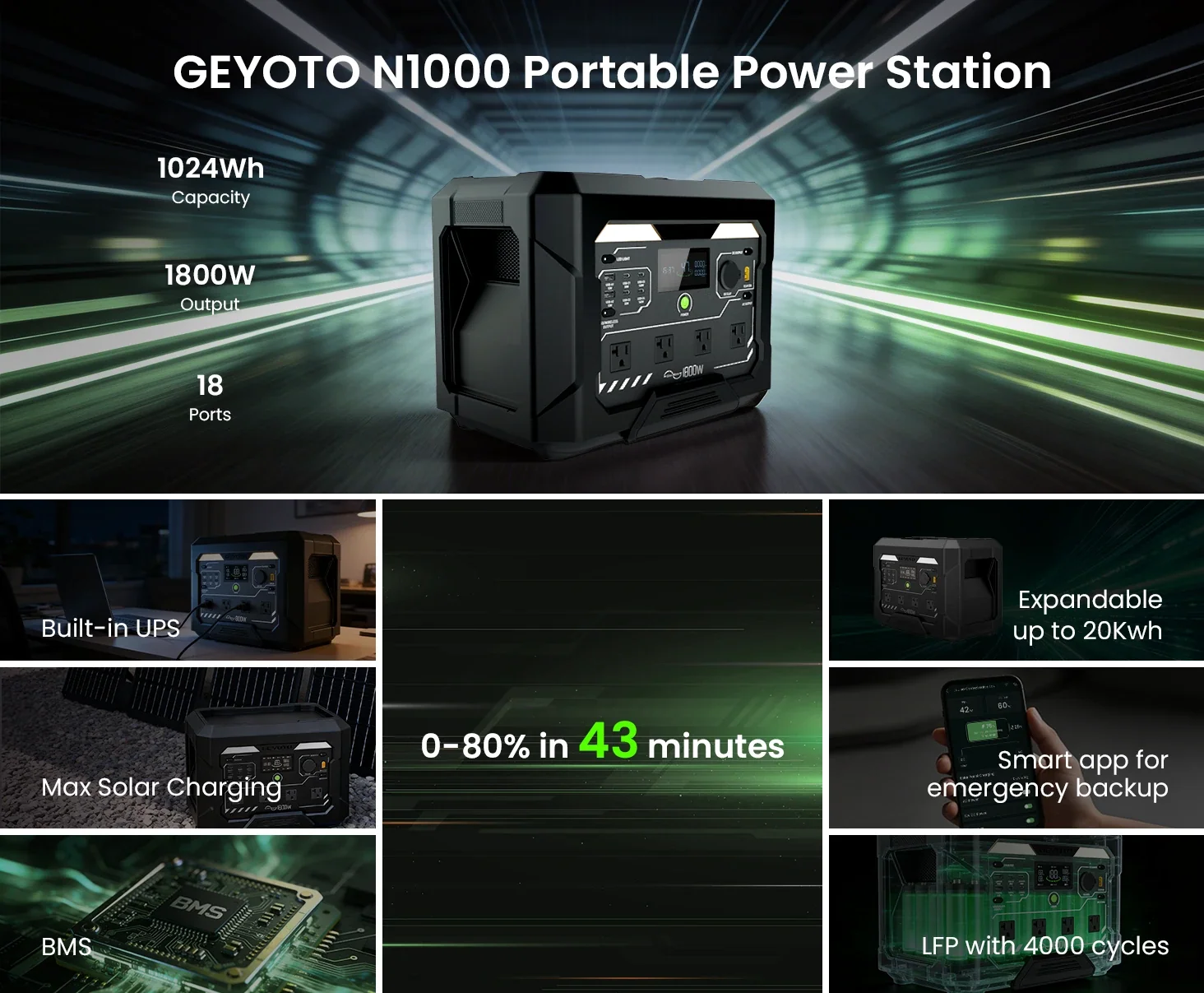
When the electricity suddenly goes out, having dependable backup power can make a major difference. Storms, wildfires, equipment failures, extreme weather, and planned utility outages can interrupt electricity for hours or even days. A portable power station provides a convenient way to keep essential household devices operating without relying entirely on a traditional fuel-powered generator. However, choosing the right model requires more than simply looking at battery capacity. The best portable power station for home emergency backup should combine sufficient energy storage, reliable output, convenient charging, safety features, and practical portability.
Battery Capacity and Usable Energy
Battery capacity is one of the first specifications to evaluate. It determines how much energy the power station can store and how long it can operate connected devices before requiring a recharge. Capacity is commonly expressed in watt-hours (Wh).
A smaller unit may be suitable for charging phones, tablets, lights, routers, and other low-power electronics. Larger-capacity models can support refrigerators, medical equipment, televisions, communication equipment, and other essential appliances for longer periods.
It is important to distinguish between advertised battery capacity and usable energy. Conversion losses occur as stored DC energy is converted into AC power, so the actual runtime will normally be lower than the theoretical calculation. Consider your essential devices and estimate their combined wattage before selecting a capacity.
High Continuous and Surge Power Output
Battery capacity tells you how much energy is stored, while output power determines what the station can actually run. Look for a model with enough continuous wattage to handle your priority appliances.
Some appliances, particularly refrigerators, freezers, pumps, and tools, can require substantially more power when their motors start. This temporary demand is known as surge or peak power. A power station with a strong surge rating can handle these startup requirements more effectively.
For emergency backup, check both continuous output and peak output rather than choosing a model based only on its battery size. A large battery with insufficient inverter output may still be unable to operate certain household appliances.
LiFePO4 Battery Technology
Battery chemistry is another important consideration. Many modern portable power stations use lithium iron phosphate, commonly called LiFePO4. This chemistry is valued for its durability, thermal stability, and long cycle life.
A long-lasting battery can be especially useful for emergency equipment because the power station may spend considerable time stored between outages. LiFePO4 technology can provide a practical combination of longevity and dependable performance when properly maintained.
When comparing models, examine the manufacturer’s stated cycle-life rating and warranty. A longer-lasting battery may provide better value over the useful life of the product, even if the initial purchase price is higher.
Multiple Charging Options
A reliable emergency power station should offer more than one way to recharge. Wall charging is useful when grid electricity is available, while solar charging can become extremely valuable during extended outages.
Solar compatibility allows the battery to be replenished using sunlight without consuming gasoline or diesel. Some models can also recharge from a vehicle’s 12V outlet, giving users another option when traveling or when the household electrical supply is unavailable.
Fast charging is another feature worth considering. A power station that can quickly recharge from an AC outlet can reduce the amount of time the battery spends waiting for its next emergency use.
Solar Charging Performance
If you plan to use solar panels, pay close attention to the station’s solar input specifications. Maximum solar input wattage, supported voltage ranges, and charging efficiency can affect how quickly the battery can be replenished.
A high solar input rating does not necessarily mean the station will always charge at its maximum advertised rate. Weather, panel orientation, shading, temperature, and available sunlight all influence actual performance.
For emergency preparedness, a compatible solar panel setup can turn a portable power station into a renewable backup system. This can be particularly helpful during long outages when conventional fuel supplies or charging facilities may be limited.
Pure Sine Wave Inverter
The inverter converts the battery’s stored DC electricity into AC electricity used by many household appliances. For sensitive electronics, a pure sine wave inverter is generally the preferred option.
Pure sine wave output closely resembles the electricity supplied by a conventional utility grid. It can be appropriate for equipment such as computers, televisions, networking devices, refrigerators, and various electronic appliances.
When selecting a unit, confirm the inverter’s continuous and surge ratings as well as the type of AC waveform it produces.
Plenty of Ports and Outlets
A versatile emergency power station should provide enough connection options for your household needs. Common outputs include AC outlets, USB-A ports, USB-C ports, and DC outputs.
USB-C Power Delivery can be particularly useful for modern phones, tablets, laptops, and other compatible electronics. AC outlets are useful for conventional household appliances, while DC ports can support compatible devices without requiring AC conversion.
Think about which devices you are most likely to use during an outage. Having multiple ports allows several essential devices to operate simultaneously and reduces the need for additional adapters or power strips.
UPS or Pass-Through Backup Capability
An uninterruptible power supply, or UPS, can make a portable power station considerably more useful at home. When connected to the electrical grid, a compatible unit can supply power to connected equipment while remaining charged. If the grid fails, the system can automatically switch to battery power.
This feature is especially valuable for internet routers, computers, security systems, and other equipment that benefits from continuous operation.
Not every portable power station provides the same transfer speed or UPS functionality, so check the manufacturer’s specifications if uninterrupted operation is an important requirement.
Safety and Battery Management Features
Safety should never be overlooked when purchasing emergency power equipment. Look for built-in battery management systems that monitor conditions such as temperature, voltage, and current.
Protection against overcharging, overheating, overcurrent, short circuits, and excessive discharge can help protect both the power station and connected equipment.
A quality enclosure, reliable cooling system, clear display, and reputable certification can also contribute to safer operation. Always follow the manufacturer’s instructions concerning ventilation, storage, charging, and operating temperatures.
Display, Monitoring, and Smart Controls
A clear display makes it easier to understand how much energy remains and how much power connected devices are consuming. Useful information may include battery percentage, input wattage, output wattage, estimated runtime, and charging status.
Some newer models offer mobile applications that allow users to monitor the station remotely, adjust settings, or receive status information. These features are not essential for everyone, but they can make emergency power management more convenient.
Portability and Practical Design
Despite being designed for home backup, a portable power station should still be reasonably easy to move. Weight, dimensions, carrying handles, and wheel designs can all affect usability.
A very large battery may provide impressive runtime but could be difficult to move between rooms. Consider where you will store the unit and where it might be needed during an outage.
A well-designed power station should balance energy capacity with practical portability. Easy access to ports, a readable display, and sturdy construction can also make the device easier to use under stressful emergency conditions.
Expandable Battery Capacity
Some power stations allow additional battery modules to be connected. This can be beneficial if your electricity needs increase over time.
Expandable systems provide flexibility because you can begin with a smaller configuration and add storage later. They may also be useful for households that want to support larger appliances or extend backup duration without replacing the main power station.
Before buying, verify which expansion batteries are officially supported and whether expansion affects charging speed, portability, or other operating characteristics.
Warranty and Long-Term Reliability
Emergency equipment is expected to work when it is needed, so warranty coverage and manufacturer support deserve attention. Compare warranty duration, battery coverage, customer support availability, and replacement policies.
It is also wise to research how frequently the manufacturer provides firmware updates or product support. A well-supported power station can offer greater confidence over years of ownership.
Choosing the Right Power Station for Your Home
The ideal model depends on your household’s specific emergency requirements. Start by identifying essential devices and calculating their approximate power consumption. Then determine how many hours you want those devices to operate and select an appropriate battery capacity.
Prioritize battery chemistry, inverter performance, charging flexibility, solar compatibility, safety systems, and the number of available outlets. Features such as UPS capability, expandable storage, smart monitoring, and portability can further improve the overall experience.
Ultimately, the best portable power station for home emergency backup is not necessarily the biggest or most expensive model. It is the one that provides enough usable energy, adequate power output, dependable charging options, and appropriate safety features for the devices you actually need during an outage. Careful comparison of these specifications can help you build a practical backup system capable of keeping essential household equipment running when the grid goes down.